
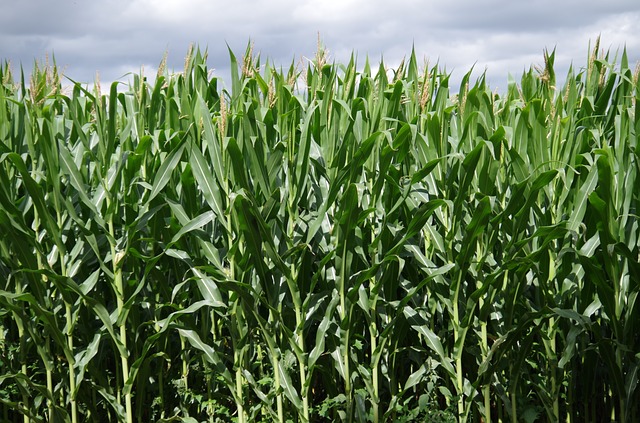
China’s CITIC Agri Fund has agreed to acquire a portion of Dow AgroSciences’ corn seed business in Brazil for $1.1 billion.
The deal includes seed processing plants, seed research centers, a copy of Dow AgroSciences’ Brazilian corn germplasm bank, the Morgan seed brand, and a license to use the Dow Sementes brand for a predetermined period of time.
The sale of the assets, which generated $287 million last year, is being undertaken by Dow in order to satisfy conditions set by U.S. anti-trust regulators and Brazil’s Administrative Council for Economic Defense (CADE) in relation to the company’s pending $130 billion merger with DuPont initially announced in December 2015.
“Today’s announcement further advances the regulatory approval process, and maintains the strategic logic and value creation potential of our merger with DuPont and the three independent companies we intend to create,” said Andrew Liveris, Dow’s chairman and chief executive officer.
“We believe this agreement serves the best interests of all stakeholders, including our shareholders, customers and employees. The combination of our portfolios, even with this divestiture, will create a much stronger Agriculture company with greater choice and innovation for growers around the world.”
Within the first two years after merging, Dow DuPont plans to split into three publicly traded, independent businesses through a process of tax-free spin offs. Ed Breen, the current CEO of DuPont, will lead the advisory committees responsible for the spin-off of what will become a “pure-play agriculture” unit and the specialty products unit, while Andrew Liveris, current CEO of Dow Chemical, will lead the advisory committee for the spin-off of the material sciences unit.
The agricultural unit will bring together both DuPont’s and Dow’s seed units and crop protection units with expected revenue of $19 billion. The material science units will encompass DuPont’s Performance Materials unit and Dow’s Performance Plastics, Performance Materials and Chemicals, Infrastructure Solutions and Consumer Solutions units with expected revenues of $51 billion. And the Specialty Products business will include DuPont’s Nutrition and Health, Industrial Biosciences, Safety and Protection and Electronics & Communications units, along with Dow’s Electronic Materials unit, with expected revenue of $13 billion, according to NPR.
Seeds of Strength
The deal also is reflective of China’s push to gain a more controlling stake in the global seed market – a strategy also demonstrated through ChemChina’s deal to acquire Syngenta for $43 billion.
Home to 21 percent of the world’s population, but only 9 percent of its arable agricultural land, China is being driven by the expansion of its middle class, a limited arable land base, and challenges regarding pollution to look overseas for food security solutions. Despite being the second biggest corn producing country in the world, yields in China are 44 percent below those in the U.S., according to U.S. Department of Agriculture data, reports Bloomberg.
More than just representing the largest potential takeover for a Chinese company, the acquisition of Syngenta also will give China a huge bank of intellectual property that will be key for developing strategies for meeting domestic food security in the coming years.
As the world’s largest pesticide producer and owner of one of the largest seed portfolios containing 6,800 varieties, Syngenta will enable China’s agricultural sector to mitigate the effects of degraded farmland and polluted water supplies, and if the deal is completed, it will make ChemChina the world’s top supplier of agrochemicals.
“Only around 10 percent of Chinese farmland is efficient. This is more than just a company buying another. This is a government attempting to address a real problem,” a source told Reuters.
For Dow and DuPont, the two companies continue to work with regulators in the remaining countries yet to grant approval for the merger. The deal is still expected to generate cost synergies of about $3 billion and growth synergies of approximately $1 billion. The planned spinoffs are expected to happen within the first 18 months after the deal closing, which is expected to occur in August of this year.
-Lynda Kiernan
Lynda Kiernan is Editor with GAI Media and daily contributor to GAI News. If you would like to submit a contribution for consideration, please contact Ms. Kiernan at lkiernan@globalaginvesting.com